







Auto accident attorney, Dana P. Oswalt esq.
A sideswipe accident in Fallon resulted not only in death and injury but also in a reduction in natural gas supply and the loss of power for more than 1,400 customers. The accident occurred on U.S. 50 when a minivan driver pulled out in front of a tractor-trailer. The driver of the truck swerved to avoid the minivan but wound up striking it anyway as well as sideswiping a sedan.
This caused the truck to lose control, crashing into a power pole and a gas line before going down an embankment where it subsequently exploded. The truck driver was either ejected or forced from the cab due to the explosion and died at the scene. The mini-van driver suffered moderate injuries. The driver of the sedan was uninjured.
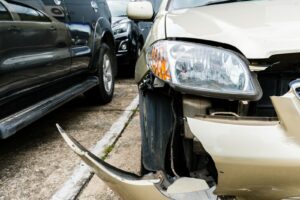
A sideswipe accident is a type of accident that occurs when the side of one vehicle scrapes against the side of another vehicle. The vehicles can be traveling in the same direction in adjacent lanes or in opposing directions. A driver can also cause a sideswipe accident involving a parked car. Often regarded as a minor accident, sideswipe collisions can actually result in serious injury or even death.
According to recent statistics provided by the Insurance Information Institute, there were 940 fatal sideswipe accidents in the United States in a year’s time. The National Safety Commission reports that about 27,000 people are injured each year due to sideswipe collisions.
How Do Sideswipe Collisions Occur?
Sideswipe accidents almost always occur due to one driver failing to maintain his or her travel lane. Failure to keep in the proper lane was the precipitating event in 3,826 accidents in the United States in one recent year. The reasons why someone would fail to stay in their own lane include:
 Improper passing, such as not fully entering the passing lane and sideswiping a vehicle while attempting to overtake it.
- Attempting to change travel lanes at the same time that someone else is also attempting to enter the same lane of travel.
- Alcohol impairment or fatigue, which both decrease a driver’s ability to maintain a single lane of travel, causing him or her to drift between lanes.
- Aggressive driving or road rage, which include dangerous driving behaviors such as speeding and threading traffic. Road rage also produces behaviors such as intentionally ramming or sideswiping another vehicle in an attempt to run it off the road.
- Swerving into another driver’s lane of travel in an attempt to avoid an unrelated accident.
- Failing to check one’s blind spot before changing lanes. The blind spot is an area alongside the back of the vehicle that the driver is unable to see using a rear view or side mirrors. All vehicles have a blind spot, but the blind area is much bigger on large vehicles such as tractor-trailers or full-size pickup trucks.
- Driver distractions such as texting or other cell phone use, adjusting vehicle controls, eating or drinking, or visiting with passengers, which draws a driver’s attention away from the task of driving may cause them to drift in and out of their lane.
- Merging lanes on the roadway such as those experienced when entering the highway may lead to a sideswipe accident if a driver fails to wait for a large enough gap in traffic before attempting to merge.
- An unrelated accident which causes one of the vehicles to lose control and enter another lane of travel.
- Icy road conditions which can cause a vehicle to slide out of its lane and into other vehicles that are traveling or are parked on the side of the road.
- Improper turns when there is more than one turn lane and two vehicles turning at the same time. If one vehicle turns too wide or too tightly, it could cause a sideswipe event with the vehicle alongside it. This is a particular risk with tractor-trailers, which require wide turns to accommodate the size of the truck.
- Failing to move over one lane when driving past a previous accident or emergency vehicles on the side of the roadway.
Who Is Liable for the Sideswipe?
Drivers are required by law to maintain their own lane of travel unless turning or making a lane change. To change lanes, one must first use the appropriate turn signal and ensure that the lane they’re moving into is free of traffic and that changing into the lane will not pose an impediment or hazard to traffic. In sideswipe accidents liability generally falls on the driver who fails to maintain his or her lane. The exception to this rule may be when two vehicles attempt to enter the same lane of travel at the same time or when the sideswipe occurs as a result of an unrelated accident.
To prove liability in a sideswipe or other type of traffic-related crash, you must be able to show that:
- The liable party owed you a duty of care. The duty of care that one driver owes to another is generally the safe and lawful operation of a motor vehicle.
- There was a breach in this duty of care. This would be the negligent behavior that the driver exhibited that led to the crash, such as distracted driving, alcohol impairment, or failure to properly maintain his or her lane.
- This breach caused the accident, which resulted in the injuries and expenses incurred by the victim.
Accident victims in Nevada can obtain compensation for expenses incurred through a legal claim against the at-fault party’s insurance policy either via a settlement or a personal injury lawsuit.
Can Sideswipe Accidents Be Prevented?
Good driving behavior will reduce your chances of a sideswipe accident. Examples of good driving behavior include:
- Always using a turn signal when changing lanes to communicate your intentions to other drivers.
- Always checking your blind spot and your mirrors before changing lanes.
- Avoiding driving when you’re fatigued, distracted, or impaired by alcohol.
- Taking measures to alleviate road rage and not driving aggressively.
That said, yes, if everyone pays close attention to the road, we can prevent all sideswipe accidents.
If someone else failed in their duty to drive safely and injured you in a sideswipe accident, you likely have many legal questions. A car accident lawyer can help you understand the options available to you.
Benson & Bingham Accident Injury Lawyers, LLC
626 S 10th St
Las Vegas, NV 89101
702-382-9797