






When you’re involved in a car accident in Las Vegas, a personal injury case, or another civil or criminal law matter, there are several things you should keep in mind as you start to seek compensation. In every instance, there are deadlines. These deadlines, also known as the statute of limitations, are important to remember as they influence whether or not you can legally pursue litigation.
Navigating the legal world in Las Vegas can be complicated and requires a professional Las Vegas personal injury lawyer to walk you through the nuances and deadlines. Deadlines vary depending on the case, and in some instances, the clock does not start ticking on the deadline immediately. A skilled and qualified lawyer will make sure to understand your particular situation so that you don’t miss any deadlines and are able to acquire the compensation you deserve.
What Is the Statute of Limitations?
After an incident occurs, you have a certain timeframe to file a lawsuit. The timeframe begins the moment the incident occurs, such as an accident. The timeframe exists to make sure that the lawsuit is pursued while the evidence is available and new, allowing for easier and just resolution.
If you do not file your lawsuit or claim within the statute of limitations for your case, you will not be able to file at all. This means that if you meant to file a claim for your personal injury accident, and you missed the deadline by a few days, you will no longer be able to pursue legal action.
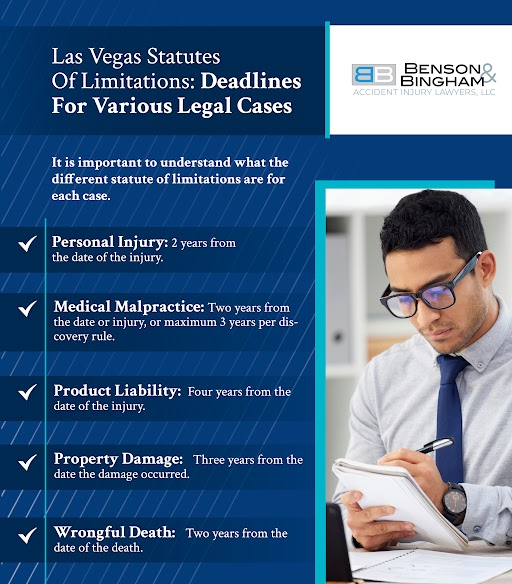
Las Vegas Statutes of Limitations: Deadlines for Various Legal Cases
- As stated above, each State and each situation has different deadlines as to when you can file a claim. It is important to understand what the different statutes of limitations are for each case.
- Personal Injury: 2 years from the date of the injury.
- Medical Malpractice: 2 years from the date of injury, or a maximum of 3 years per the discovery rule.
- Product Liability: 4 years from the date of the injury.
- Property Damage: 3 years from the date the damage occurred.
- Wrongful Death: 2 years from the date of the death.
Critical Steps To Take Before Your Statute Of Limitations Expires
If you are involved in a personal injury or accident, it is essential to contact a personal injury lawyer. From there, your lawyer can understand your specific situation and give you advice on how to proceed before the statute of limitations is up in your situation.
Some of the steps you will need to take with your lawyer before the statute of limitations is up on your case:
- Gather your medical records
- Obtain a police report
- Provide insurance information
- Arrange the details of what happened
- Find any photo or video evidence
- Gather witness information
Don’t Wait To Get Started On Your Claim, Contact Our Las Vegas Personal Injury Lawyers Today
The longer you wait to start a claim, the closer you get to the end of the deadline you get. Don’t wait, contact our Las Vegas pedestrian accident lawyers at Benson & Bingham today! Our team is trained and qualified to handle your case, regardless of the situation. You can count on us to keep you informed and to help you navigate Nevada’s complex legal system.
Contact us today for a consultation and have peace of mind in your journey towards compensation.
Read About Our Other Secret Top Tips to Maximize Your Compensation
1. Settle Faster, Settle Bigger: 20 Tips From Top Injury Lawyers for Maximizing Your Settlement
2. Understanding the Insurance Process: Navigating insurance claims and negotiations effectively.
3. Gathering Crucial Evidence: Tips for collecting and preserving evidence to strengthen your case.
4. Documenting Your Injuries: Importance of thorough medical documentation for maximizing compensation.
5. Negotiating with Insurance Adjusters: Techniques for achieving a favorable settlement offer.
6. Understanding Settlement Offers: Evaluating offers and knowing when to accept or negotiate further.
7. Considering Future Damages: Anticipating long-term medical expenses and future losses.
8. Avoiding Common Mistakes: Pitfalls to avoid that could jeopardize your settlement.
9. Calculating Your Damages: Including medical bills, lost wages, and non-economic damages.
10. Proving Liability: Strategies for establishing fault and holding the responsible party accountable.
11. Dealing with Medical Providers: Managing medical bills and liens during the settlement process.
12. Utilizing Expert Testimony: Leveraging expert witnesses to support your claim.
13.Navigating Legal Deadlines: Understanding statutes of limitations and other time constraints.
14. Preparing for Litigation: Steps to take if settlement negotiations break down and litigation becomes necessary.
15. Seeking Emotional Support: Importance of seeking emotional support during the settlement process.
16. Reviewing Legal Fees and Costs: Understanding the financial aspects of hiring a lawyer and pursuing a claim.
17. Handling Subrogation Claims: Dealing with reimbursement claims from insurance providers.
18. Staying Informed and Empowered: Keeping up-to-date with the progress of your case and asking questions.
19. Protecting Your Rights: Knowing your legal rights and advocating for fair treatment throughout the process.
20. Maintaining Confidentiality in Settlement Negotiations and Mediations